If you’re here because you’ve lived with pain for a while, or because you care for someone who has, I want you to know that I understand. I lived with pain for a very long time, more than 20 years. But I found hope and healing in the most unexpected place. And I believe you can too.
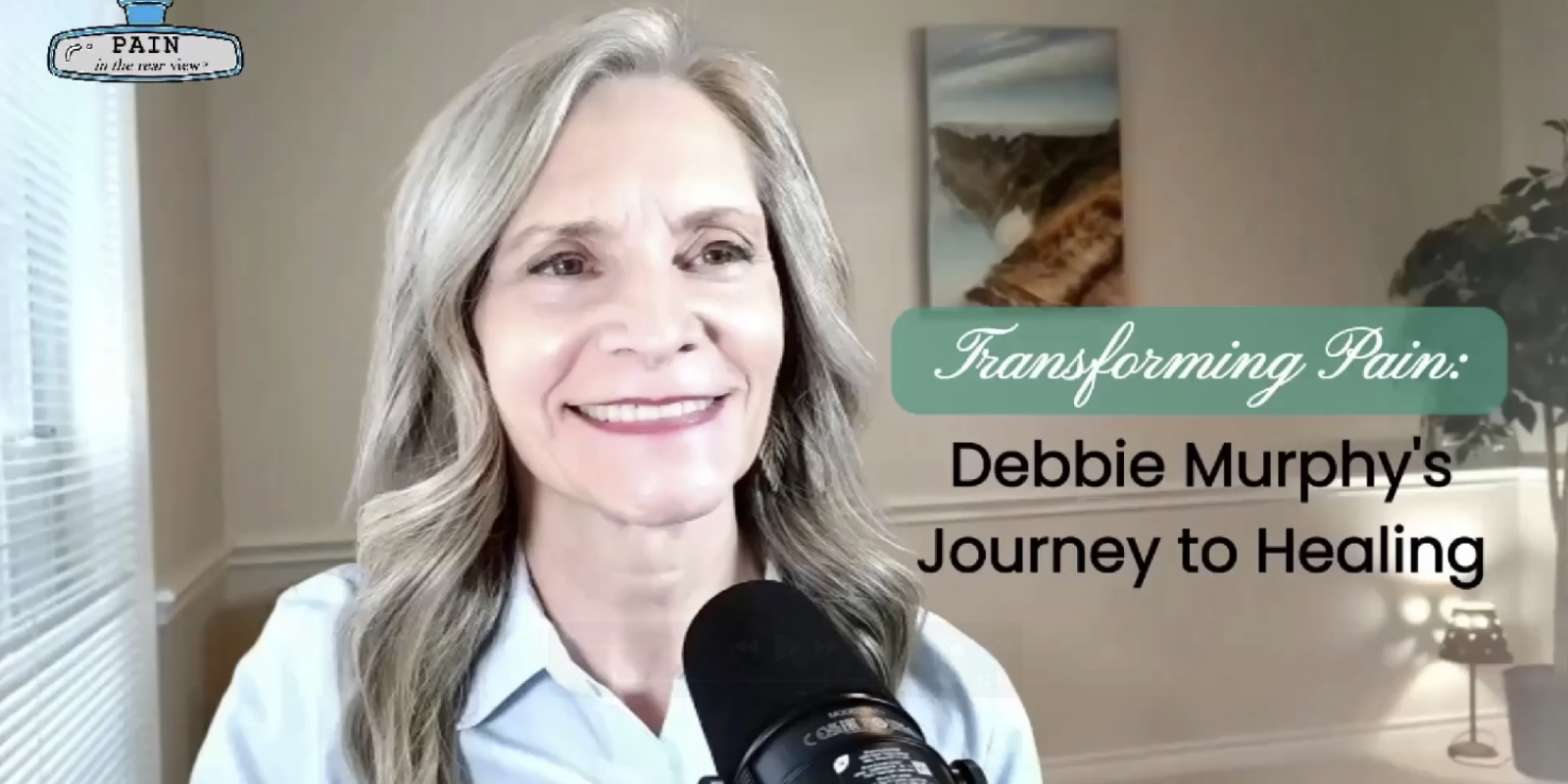
I’m Debbie Murphy, a certified pain management coach. My husband Jim, a medical family therapist, walked through all of it with me. For most of those years I lived with unmanaged pain, until I learned the things I now share through this work. These ideas were so transformational that people who knew me before and see me now sometimes call me a walking miracle.
I’m not here to offer quick fixes or miracle cures. I’m here to offer education, hope, and understanding. Everything I share is educational rather than medical advice, but it’s grounded in evidence-based pain science and in my own lived experience.
How a Short-Term Injury Became 20 Years of Pain
Almost 30 years ago, I was in a car accident. I was rear-ended and injured my pelvis. What should have been a short-term injury that healed quickly instead turned into more than 20 years of chronic pain.
I went from doctor to doctor, treatment to treatment, medication to medication. You may recognize that pattern in your own story. Because the injury was in my pelvis, sitting became my biggest challenge. I couldn’t sit for more than about 10 minutes at a time, so I spent most of my days lying down, usually on the couch. If we needed to drive anywhere more than 10 minutes away, we had a special setup so I could lie down in the back seat. That was how I got around.
I was also put on high doses of prescription opioids to manage the pain. They helped, but as many people know, they came with a long list of side effects.
And then there were the emotions, which you may identify with too. I carried a lot of guilt for not being able to fix my pain, and for how much other people had to do for me. I felt helpless, like I should be able to do something to get better but couldn’t. Fear ruled my life. I was afraid I couldn’t handle the pain anymore, afraid I’d never have a real life again, afraid this was all there would ever be. And honestly, there was anger too, that I wasn’t going to get to live the life I’d hoped for.
For years I just kept trying, searching for the right treatment that would finally fix me. I wanted my life back.
The Conversation That Changed Everything
For most of those 20-plus years, I didn’t have much hope. That didn’t change until I stumbled onto some truths that took a long time to reach.
I was in physical therapy for much of that time. There was always something the doctors were working on, and I do believe movement is medicine, so I got real help from it. But it wasn’t enough.
Then one day my physical therapist asked me what I knew about pain. I said, “I don’t know what you mean. Pain hurts.” And he began sharing small bits of information about how pain is actually created in the brain and body. I remember thinking, no one has ever told me any of this before.
As I kept learning about the science of pain and how the body processes it, I encountered idea after idea I’d never heard. It was intriguing, even if I wasn’t sure what to do with it at first. So I kept reading. I found techniques and principles and started putting them into practice. And for the first time in over 20 years, I began making lasting change.
Why Information Made a Difference When Treatments Hadn’t
It’s a fair question. Why would simply learning something make a difference when medications, treatments, and surgeries hadn’t?
It made a difference because pain is never just physical. For all those years, my doctors had been working only on the physical side of my pain.
We usually picture pain as a simple signal: something gets damaged, a message travels to the brain, the brain measures the damage, and it sends back the right amount of pain. But scientists now understand that pain is far more complex than that. When a message reaches the brain saying there might be danger, many areas of the brain get involved in deciding if pain is needed and how much.
That decision isn’t based only on possible tissue damage. The brain also considers your memories of past pain and how you learned to deal with pain growing up. It weighs your emotions, especially fear. It factors in your thoughts, like “I don’t think I can handle this.” It considers your expectations, whether you believe you can manage or feel completely hopeless. I know I felt hopeless for a long time. And it accounts for how much attention you’re giving the pain.
Here’s a small example. About a month ago I was at the zoo with my grandchildren, waiting in line for the zip line. We were near the front when a bee stung my ankle. If you’ve had a bee sting recently, you know how much it hurts. I almost couldn’t think straight. But I didn’t have many options, so I got on the ride. As we went up into the beautiful scenery and came flying back down, it was genuinely fun. And when we reached the platform, I realized something: I hadn’t noticed the bee sting at all during the ride, because I was so absorbed in the experience. The moment I sat still on the platform again, it started hurting exactly as much as before.
That was a brand new, very physical injury, and even then, attention changed my experience of the pain. All of these factors, not just tissue damage, communicate together, and the brain decides what action to take and how much pain is necessary.
From Victim to Vital Part of the Process
Can you identify with going from doctor to doctor, treatment to treatment, wondering why nothing seems to work? Maybe, like me, you keep hoping you just haven’t found the right treatment yet, the magic pill that fixes it all. It’s easy to feel like a victim, waiting for someone to come fix you.
But because pain is shaped by so much more than the tissues, medical treatment alone is often not enough. That doesn’t mean your pain isn’t real. It means pain is more complex than we were taught. It was only when I began working with these other areas, my thoughts, my fear, my attention, my expectations, that real change started to happen. And it was more powerful than I ever thought possible.
It’s empowering, because you stop seeing yourself as broken and waiting to be repaired. You realize you’re a vital part of your own healing, and that there are tools you can learn that make a real difference in how you manage pain.
Where the Name Comes From
People often ask about the name, Pain in the Rear View. The honest answer is that Jim and I were trying to come up with something, and we joked that I’d had a literal pain in the rear for as long as we could remember, thanks to the pelvic injury. And maybe, every now and then, I’d been a bit of a pain in the rear myself.
At some point we realized that used to be the case, but now my pain is in the rear view. It’s not that the pain is entirely gone. It’s that it’s no longer the primary focus, and no longer in control of our lives.
This Is Just the Beginning
I didn’t learn all of this overnight, or from one conversation with my physical therapist. It took time to understand and to put these tools into practice. But I’m no longer the woman who felt trapped with no hope for a future. And you can get there too.
This is just one step in a longer journey we’ll take together. In the posts ahead, I’ll share the evidence-based ideas that made such a difference for me, one piece at a time, so you can begin taking control of your pain and getting your life back.