Have you ever apologized for hurting? Maybe you’ve said things like, “I’m sorry I’m slowing everyone down,” or “I’m sorry I can’t help today,” or “I’m so sad that you have to take care of me.”
I said things like that more times than I can count.
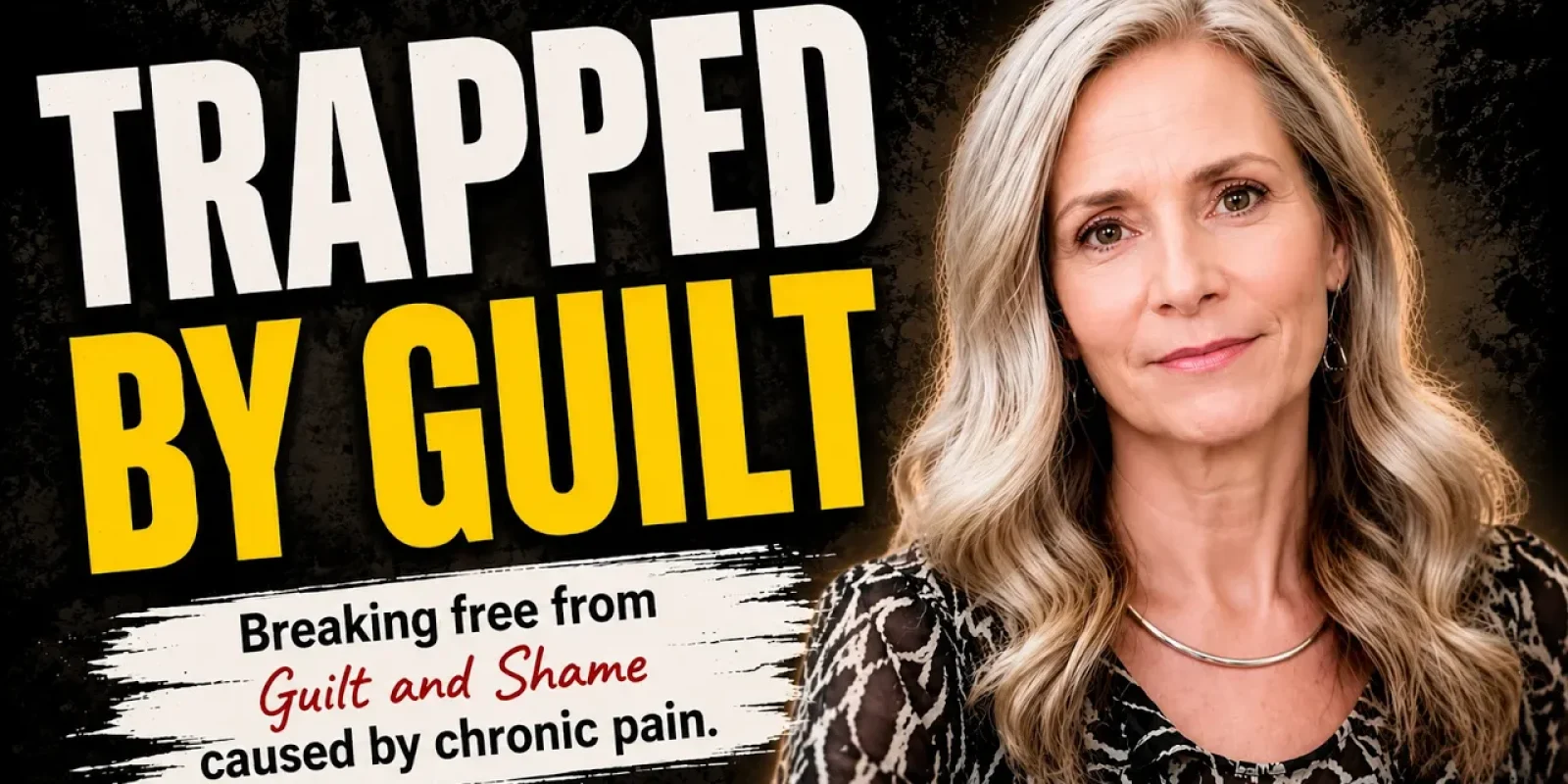
At first, I thought I was just being polite. But eventually I realized I wasn’t only apologizing. I was carrying something much heavier: guilt. And over time, that guilt slowly changed how I saw myself. Eventually it became shame.
I want to talk about both, because understanding them can make a real difference in your pain journey. I’m joined in this conversation by my husband and colleague Jim, a medical family therapist who works alongside me helping people in pain live with more purpose and less pain. We walked together through my 20-plus years of unmanaged chronic pain, and through the last nine years of learning to manage it much more effectively.
Chronic Pain Changes More Than the Body
When people think about chronic pain, they usually think about the physical symptoms: pain, fatigue, poor sleep, stiffness. But chronic pain changes far more than the body. It changes routines, relationships, careers, dreams, and identity.
Because it changes so much, it creates emotional burdens no one else can see. Two of the biggest are guilt and shame. Most of us don’t talk about them, but almost everyone living with chronic pain experiences them. I was trapped in both.
Guilt Focuses on What We Do
Guilt tends to speak in “should” and “shouldn’t.” I should have done this. I shouldn’t have done that. I need to do more. I’m letting people down. Guilt focuses on our actions, or on the things we wish we could do but can’t.
For years I felt guilty because I couldn’t help the way I wanted to. I felt guilty when Jim had to do more around the house. I felt guilty when I had to miss family events, when I had to ask for help, when I needed to rest more often.
This is something many caregivers notice: people living with pain often apologize for things they never chose. You didn’t choose to hurt. You didn’t choose to be exhausted. And yet so many people in pain carry responsibility for circumstances that aren’t their fault. It’s a heavy burden.
Not All Guilt Is the Same
Here’s an important distinction. Not all guilt is bad.
I think of it as little “g” guilt and big “G” guilt. Little g guilt is healthy. It says, “I made a mistake, I hurt someone, I need to apologize.” It helps us repair relationships and grow.
But chronic pain often creates big G guilt, the kind that says, “I should be able to do more. I shouldn’t need help. I’m disappointing everyone. I’m making life harder for my family.” That kind of guilt doesn’t lead to healthy change. It leads to exhaustion, because the problem isn’t your character. It’s your circumstances.
Big G guilt convinces us we’re never doing enough.
Guilt Doesn’t Just Affect Emotions, It Affects Decisions
This was a hard lesson. When I felt guilty about saying no, I said yes, even when I knew it was too much. When I felt guilty about resting, I pushed through, even when I knew I was hurting myself. When I felt guilty about asking for help, I tried to do everything myself, even when it was beyond what I could handle.
At the time, those choices felt responsible, like I was doing the loving, kind thing. But they often weren’t helping me. They were increasing my pain, because I wasn’t making decisions based on wisdom. I was making them based on guilt.
My body would say slow down, pace yourself, don’t overdo it. But the guilt said something completely different, and almost every time, I listened to the guilt. And I paid the price.
One sentence I wish I’d learned much earlier: guilt says you should do more, but wisdom sometimes says, today, this is enough.
When Guilt Turns Into Shame
If guilt sticks around long enough, something subtle and dangerous happens. It starts turning into shame.
The difference matters. Guilt says, “I did something wrong.” Shame says, “I’m not enough.” One focuses on behavior. The other attacks your identity.
So instead of thinking “I need help today,” I started thinking “I’m a burden to everyone.” Instead of “I’m struggling right now,” I started thinking “I’m broken.” Those weren’t facts. They were stories that pain quietly wrote for me over the years. And I believed them.
Shame does something else, too: it isolates us. We stop asking for help. We stop sharing our thoughts and feelings. We stop letting people see us, because shame says, “If they really knew me, they’d think less of me.” And the tragedy is that shame grows best in isolation. The less we talk about it, the stronger it gets.
The Question That Helps
This is where a question I’ve leaned on before matters so much: would I say this to my best friend?
Imagine your best friend developed chronic pain. Would you tell them, “You’re lazy,” or “You’re a burden”? Of course not. You’d say, “I’m so sorry. This must be really hard. I’m here for you. You’re doing the best you can under the circumstances.”
So why was I speaking to myself in a way I would never speak to someone I love?
The Lesson I Needed Most
For years I believed my value came from what I could accomplish. How much I could do. How much I could contribute to my family. But pain took away many of those things, and without realizing it, I let pain start measuring my worth.
Worth doesn’t work that way. Your value has never depended on how productive you are, even if it feels like it does. You matter because you’re a person, not because of your performance or what you accomplish.
I see this constantly in clients. They struggle deeply when they can’t do the things they feel they should be doing. It’s completely understandable to feel sad about those losses. It’s even understandable to feel some healthy guilt if pain led us to respond to someone in a way that was unkind. But to believe that your value changes because of what you can or can’t do, or because of the pain and losses you’ve experienced, is a different story altogether.
Pain is something you experience. It is not who you are.
If you’ve been carrying guilt or shame, please remember this. Pain has influenced your life, but it has not defined your value. You are still worthy of love, still worthy of kindness, still worthy of hope. And if today all you can do is take one profound baby step, that’s enough. Not because you’ve given up, but because you’re moving forward wisely. Sometimes wisdom is far more courageous than guilt.
You deserve the same compassion you so freely give to others.