When your pain increases, or when you’re having a hard day, how do you talk to yourself?
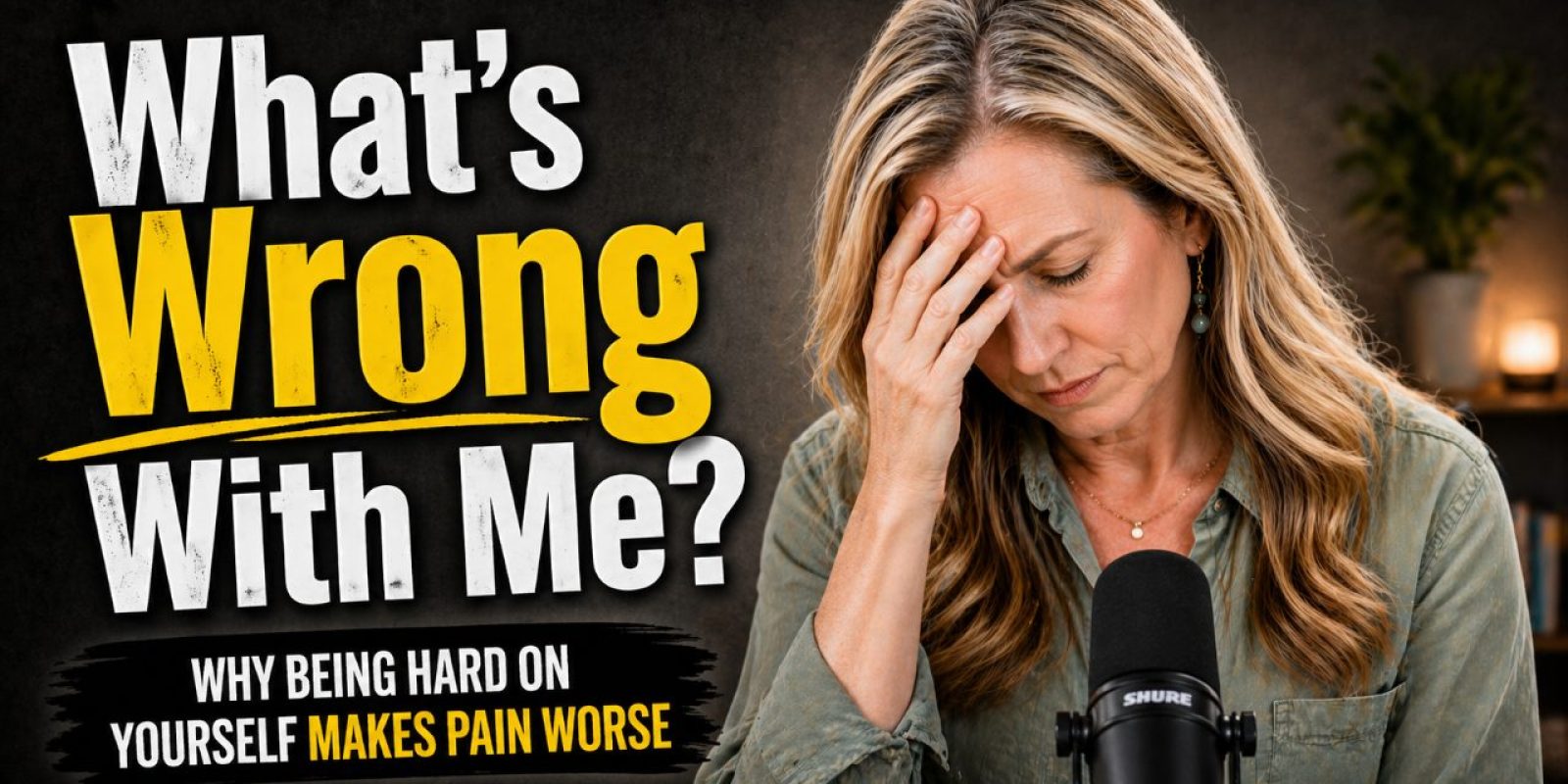
For a long time, I did not talk to myself very nicely. It was more like, “Why can’t I handle this? I should be doing better by now. What’s wrong with me? I feel like a failure.”
And I didn’t even realize how much that was affecting me.
That’s common. A lot of people don’t notice that inner voice at first, if at all. But it’s still there, and it can be harsh.
I actually thought it was helping me. I believed that being hard on myself would push me forward and help me make more progress.
What Self-Compassion Actually Is
Today I want to talk about self-compassion, which I think is one of the most overlooked pieces in pain management. It’s also one of the most misunderstood.
When people hear “self-compassion,” they sometimes think it means being soft on yourself, making excuses, or lowering your standards. That’s not it.
Self-compassion is simply treating yourself the way you would treat someone you care about.
For a long time I believed that if I pushed myself harder, I’d get better faster. So I put a lot of pressure on myself. A lot of shoulds. A lot of “come on, you can do more, you can do more to fix yourself.”
The opposite happened. The more critical I became of myself, the more overwhelmed I felt. From the outside it didn’t look motivating. It looked exhausting. It didn’t make me stronger. It made everything feel heavier.
Why Self-Criticism Makes Pain Worse
There’s a reason for that.
When you’re constantly critical of yourself, your brain hears, “Something’s wrong. We’re not okay.” That creates stress in your system. And when your system is already dealing with a lot of pain, adding more stress doesn’t help.
It can actually increase sensitivity. We assume that focusing hard and being critical will bring the pain down, but it often does the opposite, because your body interprets that internal pressure and criticism as a threat.
So I started learning to respond differently.
It took a while. I wasn’t doing it perfectly then, and I don’t do it perfectly now. But instead of “Why can’t you handle this?” I worked toward “I’m having a hard day. Be kind to yourself.” Instead of “I should be further along than this,” I tried to remind myself, “You’re doing okay. This takes time. You’re going to be alright.”
That shift might sound small, but it changed the whole tone of my system. My mind, my brain, and my body all began to shift with that move from criticism to compassion.
It’s Not a Cure, It’s a Piece of the Puzzle
Self-compassion doesn’t make the pain disappear. It’s not a silver bullet or a magic pill. But it is an important piece of the puzzle.
I think of it as softening the experience. The point isn’t to practice self-compassion in order to get rid of pain. The point is that I have some pain, and instead of fighting it, I can roll with it, accept where I am, and be kind to myself in the middle of it.
None of this is about ignoring reality. It’s about responding in a way that’s supportive instead of critical.
Honestly, it doesn’t feel natural at first. It feels awkward, and at times it feels undeserved. We see that a lot in our clients. People are so used to being hard on themselves that compassion feels unfamiliar.
The Massage Therapist Who Changed How I Saw My Body
I have a story about this.
I was always hard on myself. Angry at the pain, angry at my body, critical about why my body wasn’t working the way I wanted it to.
Then I went to a massage therapist who would talk to my body. She would say things like, “You’re going through so much difficulty right now, but I’m going to help calm you down, and I’m so sorry you’ve been having to go through so much.”
Then she would work on the part of my body that wasn’t hurting as much, and even there she would say, “I recognize that you’re holding up an extra amount right now. You’re compensating a lot, because the other side of your body isn’t quite as strong. So thank you for all the work you’re doing.”
That was a genuine shift for me. Here I was fighting my body, and she was introducing compassion toward it instead.
Compassion Is Not Pity
This is an important distinction. Self-compassion is not pity.
Pity sounds like, “Oh, you poor thing. Life is so terrible. You got a bad lot in life. Nobody understands you. You just aren’t going to make it.”
Criticism sounds like, “You’re really failing at this.”
Self-compassion is neither. It’s kindness and understanding of the reality that this is hard, combined with encouragement. It sounds more like, “This is really happening, and I’m sorry you’re going through it. And you’re going to get through it.”
It’s supportive rather than pitying. It’s offering yourself some grace. It might feel unfamiliar, but unfamiliar doesn’t mean wrong. It just means new.
Where to Start
If this feels like a big shift, or like too much to take on, that’s understandable. Start small.
You don’t have to change everything. Just start by noticing your inner voice. When you catch a critical thought, pause and ask, “What would I say to someone I care about right now?” Then try saying that to yourself.
It’s simple, but it’s a powerful place to begin.
And if you’ve been hard on yourself, especially about your pain, I want you to hear this. You’re doing okay. You are not failing. You’re navigating something genuinely difficult, and you deserve support in it, including support from yourself.
Self-compassion is not weakness. It’s supporting yourself. And support is something your system needs.
So be gentle with yourself. You’re doing more than you think.