Life with chronic pain can be entirely discouraging at times, can’t it? You try a new doctor or a new treatment, you get your hopes up that this will finally be the answer, and then it doesn’t work out.
I remember constantly searching for answers, feeling hopeful that the next thing would be the one that fixed everything. Sometimes it was a new doctor, sometimes a new treatment, sometimes a new medication. And every time something didn’t work the way I’d hoped, it felt like, “Here we go again. I thought this was going to be it. Now what?” It was exhausting. Underneath all of it was a deeper feeling of helplessness, like I had no control over my pain and was just waiting for someone else to figure it out.
What I didn’t understand then was this: chronic pain is not a one-piece problem, so it doesn’t have a one-piece solution.
Why That’s Actually Good News
I know that can sound discouraging at first. You mean I have to find a bunch of things that help, instead of one? But it can actually become a very hopeful shift, like it did for me.
For a long time, I believed I had no control over my pain. I was focused on finding the right doctor, the right diagnosis, or the new treatment that would make all the difference. But over time I discovered there were things I could do that influenced my pain. Not a magic pill or an instant fix, but real influence. That shift, from “I have no control” to “I have influence,” changed a lot for me. Because even a little influence can make a big difference.
Thinking About Pain Like a Puzzle
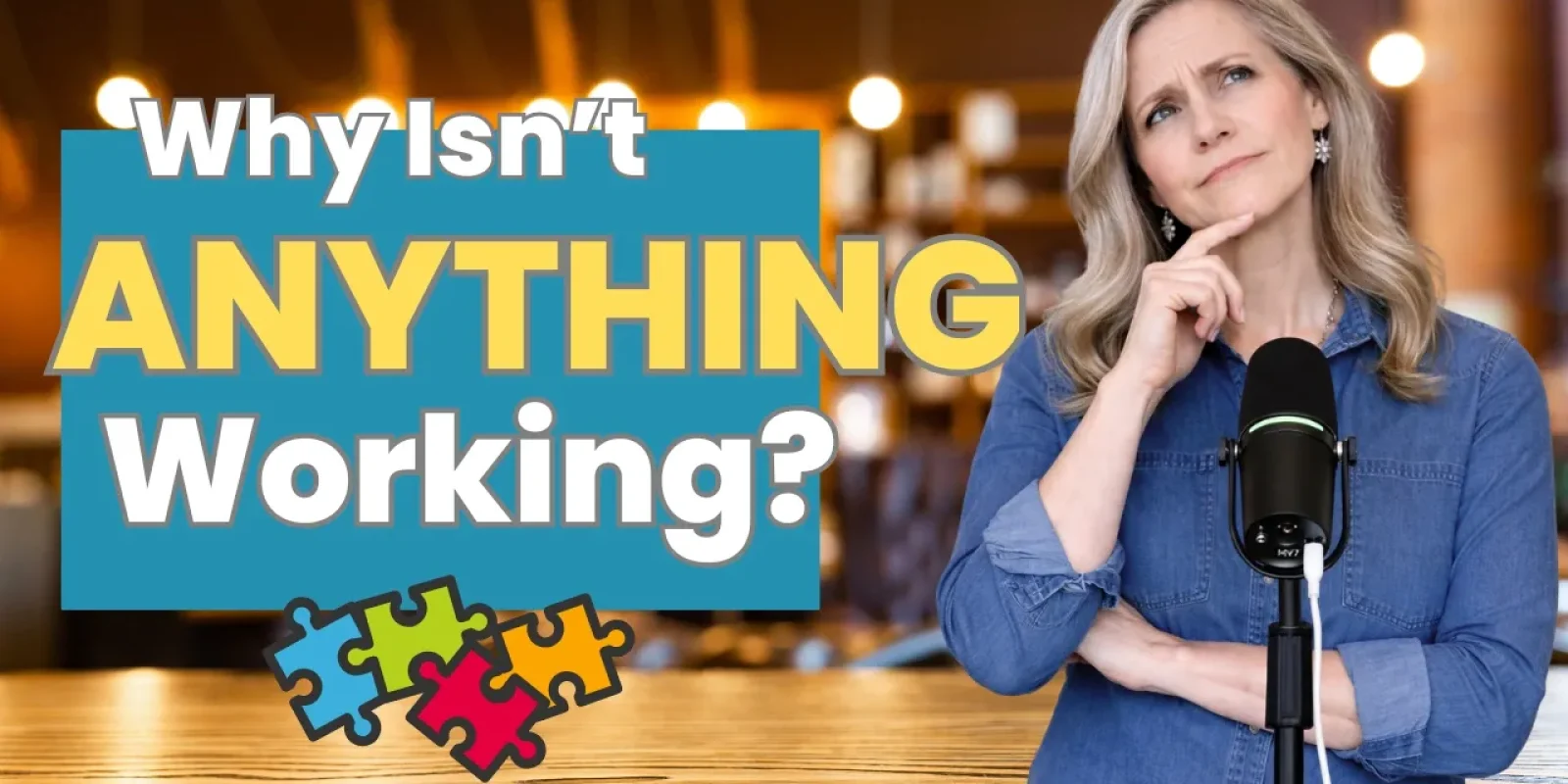
The shift was learning to think of my pain like a puzzle. Not something I had to solve perfectly, but something made up of different pieces.
For me, some of those pieces were:
Pain education. Learning how pain actually works reduced my fear, eased my constant hyperfocus on pain, and even helped me start moving again.
Diet changes. Through some trial and error, I found foods that were inflammatory for me. Once I limited them, that made a difference too.
The right movement. I’d been doing physical therapy for a while, but I eventually found a couple of yoga stretches that hit the right parts of my body without overwhelming it.
None of those pieces fixed everything. But each one helped, and that’s how my puzzle started coming together.
Your puzzle will look different from mine. But in general, the pieces can include your medical treatments and medications, movement and exercise, sleep habits, nutrition, stress management, nervous system tools, emotional and social support, and pain relief strategies like heat, ice, topicals, or massage. Pacing yourself is another piece we’ve talked about, learning to pace your energy so you have less pain through the day.
Whatever your pieces are, the important thing to remember is that no single piece has to do all the work. Each one contributes to helping you feel better.
Why the Puzzle Mindset Takes the Pressure Off
When you look for just one answer, you put all your hope in that one thing. And if it doesn’t work, it feels overwhelming and discouraging, like you’re back to square one.
But when you shift to a puzzle mindset, something changes. Instead of “this didn’t fix me,” you start thinking “maybe this is just one piece.” That shift reduces the pressure and keeps you moving forward.
Give Each Piece a Fair Shot
Here’s something I learned the hard way. When you try a new piece of the puzzle, you have to give it a fair shot.
Sometimes I’d try something once, decide “that doesn’t work,” and move on. But a new tool often feels awkward at first. You’re still figuring out how to hold it and use it just right. Some pain management tools feel clumsy in the beginning, and it’s tempting to say they don’t work for you. But if you keep at it a little longer, they might provide real relief.
Some tools aren’t designed to take pain away immediately. Some are meant to calm your system, some to support your body, some to build resilience over time. If something doesn’t feel amazing right away, that might be because it was never meant to work instantly. That doesn’t mean it isn’t helping. That’s exactly why the puzzle model works so well: the pieces start fitting together, and sometimes you don’t even know what the picture looks like until things begin falling into place.
So give yourself patience. Cut yourself some slack. One piece at a time is what it takes.
Small Pieces Add Up
Here’s one of the most encouraging parts. You don’t need any one thing to work 100 percent.
What if something helps just 5 percent? On its own, that might not feel like much. It might even be discouraging. But what if you add something else that helps another 5 percent, and then another that helps 5 or 10 percent? Now you’re starting to see real change, because those small improvements add up. They build momentum. When I had several things working together, all of a sudden it made a big difference, and I started feeling genuinely encouraged.
Where to Begin
Start simple. You don’t need to do everything. Just ask yourself, what’s one small piece I could work on right now?
You don’t have to do it perfectly. It could be learning more about how pain works, like I did. It could be trying a gentle new movement. It could be adjusting your routine so you’re pacing yourself better, or practicing one of the calming strategies you’ve heard about. Just try one, and let that be enough for now.
If you’ve been feeling discouraged, if you’ve been searching for that one answer, hear this. Pain is complex, and that means there are many ways to support yourself. You don’t need a perfect solution or a quick one-time fix. You just need a few pieces that are starting to work. So start small, be patient, and remember that even small progress counts. You’re building something, and that really matters.